
Name Badges Australia: Sustainable, Durable Choices That Impress
In Australia’s conference and events industry, the humble name badge is getting an eco-friendly makeover. More event organisers are actively searching for name badges Australia that are both sustainable and locally made, rather than defaulting to plastic pockets and synthetic lanyards.
This shift is driven by growing awareness of environmental impact and a desire to support local businesses. Terms like “sustainable name badges”, “eco name badges” and “seed paper name tags” are being searched more than ever in Australia, reflecting a real demand for greener name badge solutions.
If you are planning a conference or corporate event and want name badges Australia that align with your sustainability goals, this guide walks you through everything you need to know, from what makes a high quality badge to the latest eco-friendly alternatives.
Sustainable Name Badges Why Demand Is Rising
Choosing environmentally friendly name badges is not just a trendy idea. It is a response to genuine concerns about waste and climate impact. Traditional conference name badges are often made of PVC plastic with synthetic lanyards and come wrapped in plastic sleeves.
After a one or two day event, thousands of these badges can end up in the bin. The environmental toll of that waste is significant. Plastic not only creates landfill mass but can also pollute oceans and waterways.
According to the Australian Marine Conservation Society, about 8 million tonnes of plastic are dumped into the world’s oceans each year. A single event’s leftover plastic name tags and holders might seem small, but when multiplied across countless events, the impact adds up fast.
Quick insight for Australian events
Australia hosts roughly 484,000 business events per year, and the name tags for these gatherings can contribute over 34,000 tonnes of CO₂ emissions annually. That is a huge footprint for something worn for a day or two.
By switching to sustainable name badges made from paper or other biodegradable materials, events can significantly cut plastic waste and carbon footprint. Attendees also increasingly notice and appreciate these efforts.
For example, a recent cultural heritage conference in Sydney provided delegates with sustainable name badges and bamboo fibre lanyards, earning praise for reducing waste.
Using greener name tags not only helps the planet but also sends a positive message about your organisation’s values. In short, there is strong momentum behind eco name badges in Australia, and rethinking this small piece of your event kit can make a surprisingly big difference.
Features To Look For In A Quality Conference Name Badge
Whether eco-friendly or not, a conference name badge needs to get the basics right. Here are the key features that make name badges Australia effective and attendee friendly.
-
Durability
A good badge should withstand the wear and tear of the event. It should not rip, smudge or fall apart by day’s end. Look for sturdy materials such as thick paper or card stock if using paper badges and reliable attachments.Even sustainable name badges can be durable. Terra Tag’s recycled paper badges are made of 300 gsm card designed to survive multi day conferences. There is no need for a plastic badge holder, which avoids unnecessary landfill.
-
Legibility
The whole point of a name tag is to read it. Make sure the names and information are printed in a clear, legible font that can be read from a comfortable distance, at least a few metres.A clean, bold typeface and a generous font size for the first name are recommended. High contrast between text and background, such as black text on white or a light colour, improves readability. Avoid glossy finishes that cause glare under lights. Always test print one badge to check that names and titles are easy to read at a glance.
-
Eco friendliness
If sustainability is your goal, the badge material and end of life pathway matter. Seek out badges made from recycled or biodegradable materials over new plastic.For example, badges made from recycled paper or plantable seed paper name tags are designed to leave a minimal footprint. They can be recycled or composted instead of ending up in landfill.
Also consider eco-friendly accoutrements. Choose biodegradable lanyards or clips, such as cotton or bamboo fibre cords, instead of plastic ones. Many Australian suppliers now offer plastic free badge kits so your eco name badges feel consistent from top to bottom.
-
Design and branding
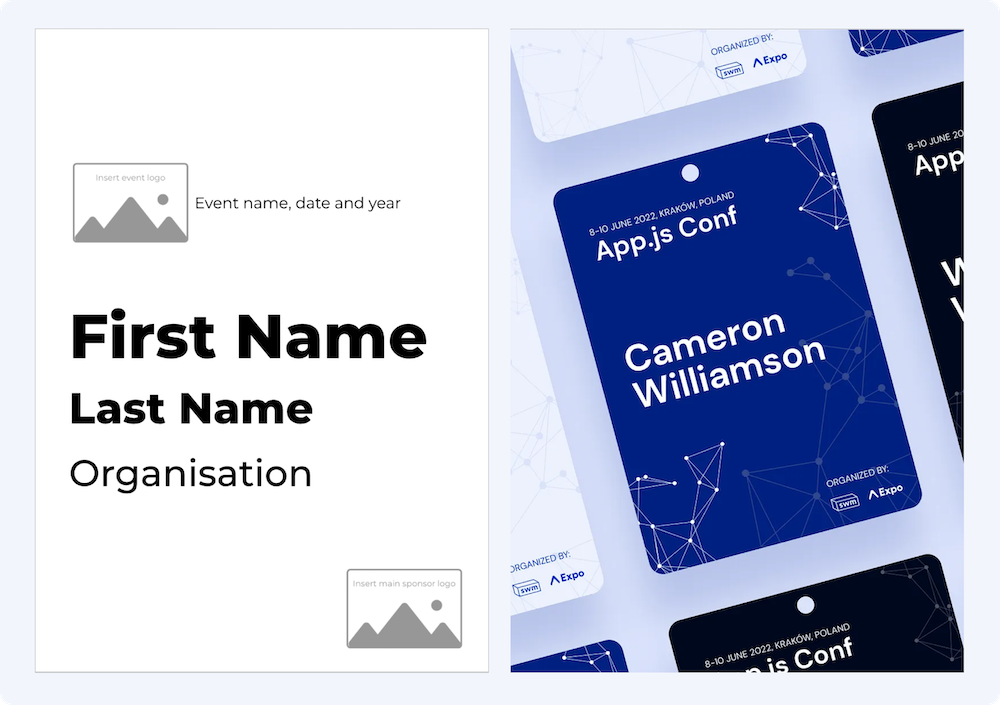
A conference badge also serves as a mini billboard for your event and sponsors, so design is key. A quality badge has a clean layout that prioritises the attendee’s name while still incorporating event branding in a balanced way.Include the attendee’s first and last name prominently, and optionally their organisation and role in smaller text. There is usually space for a conference logo or theme graphic, which helps the badge double as a keepsake.
The attendee’s identity should remain front and centre. Badge size and orientation also matter, which we explore in the design tips section later in this article.
Badge essentials checklist for Australian events
- Durable, no plastic holder required
- Readable at three metres
- Recycled or plantable materials
- Plastic free lanyards or clips
- Guest name is the hero
Eco Friendly Name Badges Australia Alternatives To Plastic
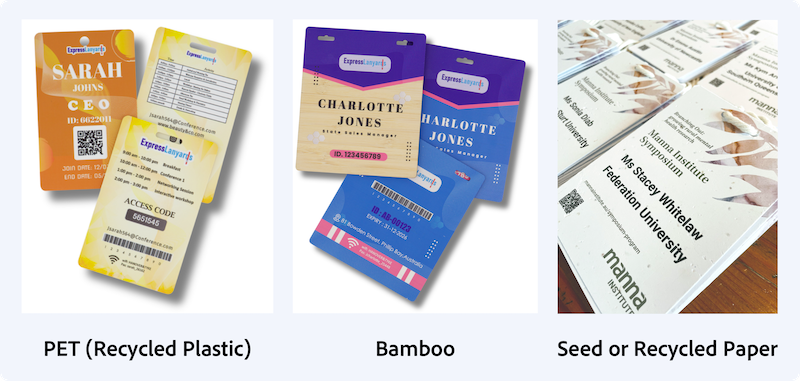
Fortunately, there are now plenty of alternatives to traditional plastic name badges that are both functional and sustainable. Below is a quick overview of popular eco friendly name badges Australia options, laid out like a deck of cards so you can compare at a glance.
Plantable seed paper name tags
Seed paper name badges are made from special paper embedded with plant seeds. After the event, attendees can plant their badges in soil and grow wildflowers or herbs.
Terra Tag offers plantable seed paper name tags handcrafted from 100% recycled paper, embedded with Australian wildflower or herb seeds. They are thick and sturdy for the event yet completely compostable afterwards.
Plantable badges carry a memorable surprise factor and are ideal when you want your sustainable name badges to start conversations. In Western Australia or Tasmania, where biosecurity laws are strict, you can swap to recycled name badges in handmade paper instead.
Recycled paper name badges
Look for badges made from 100% post consumer recycled paper or card. These feel like regular cardboard name tags but come with a much lower environmental cost than virgin paper or plastic.
Terra Tag’s recycled name badges are made from Australian business waste by a master papermaker. They can be printed in full colour and made double sided for larger events, then recycled or composted afterwards.
The natural texture and visible fibres create an earthy aesthetic that reinforces the eco story behind your name badges Australia choice.
Biodegradable and plant based plastics
For teams that still prefer a plastic style finish, there are badges made from biodegradable or plant based plastics such as PLA derived from corn starch.
PLA mimics traditional plastic but usually needs industrial composting conditions to break down efficiently. If your organisation has access to those facilities, this can be a halfway solution between conventional plastic and fully compostable eco name badges.
If not, you may prefer home compostable materials such as recycled paper or seed paper, which better match a low waste event strategy.
Wooden and bamboo name badges
Wood based name badges made from sustainably sourced wood or bamboo offer a premium, natural look. They can be laser engraved or printed with attendee names.
These badges are durable and reusable. You can collect them back and re engrave for staff or smaller internal events. Bamboo is a fast growing renewable resource and surprisingly lightweight.
They tend to suit VIPs, retreats or smaller events where budget and lead time allow. They pair well with simple cotton or hemp lanyards.
Reusable badge systems
Another approach to sustainability is reusability. Instead of issuing completely new name badges for every event, some organisations invest in reusable badge systems.
For example, you might use durable holders with a slot for printed paper inserts that can be swapped out each time. Magnetic name badges in offices follow the same idea.
Reusable systems work best when you run frequent events with a similar audience and have a simple way to collect and store the badge components between events.
Choosing the right eco badge for your event
For large one off conferences, plantable seed paper name tags or recycled name badges are usually the simplest low waste options. For smaller recurring gatherings, a reusable badge system can make sense and reduce long term costs.
DIY Name Badges When Going Do It Yourself Makes Sense
What if you are considering making the name badges yourself. DIY name badges can be a budget friendly and flexible option, especially for smaller events or when you have more time than money.
With the right tools and materials, you can create professional looking badges in house. There are a few scenarios where DIY really earns its keep.
When DIY makes sense
If you have a relatively small event, say under 100 attendees, or you need to personalise badges at the last minute, DIY can be ideal. It gives you control to make changes right up to event day if a guest’s name or title changes.
DIY can also save cost if you print your own badges on card stock and use simple clips or collected holders. For very large conferences or when your team is already stretched, DIY can quickly become time consuming, which is when outsourcing to a specialist in name badges Australia is often worth it.
Using Avery name badge kits
One popular route for DIY is to use Avery name badges, which are readily available office supply products. Avery offers pre perforated badge papers and adhesive name tag labels, as well as downloadable templates.
For example, Avery’s fabric sticker name badges and card inserts come with template codes you can load into Microsoft Word or Avery’s free Design and Print software.
Avery even has an EcoFriendly line of name tags made from 100% recycled paper. If you can find these products in Australia, they are a good bridge between DIY and sustainable name badges.
Designing your own template
If you prefer a more customised design or want to incorporate branding, you can create your own name tag template using software like Microsoft Word, PowerPoint or Canva.
Terra Tag provides a handy Word name tag template in A6 and A7 size and a step by step guide on the blog. You can lay out a sheet with multiple badges per page, test print, then move to heavier card for your final run.
After printing, you will need to cut the badges. A guillotine or craft cutter helps keep lines straight. Then pair them with a sustainable attachment such as jute twine, a recycled ribbon or existing holders you already have in the cupboard.
A hybrid approach
You do not have to choose strictly DIY or professional. Some event managers print basic badges themselves but outsource the more complex parts.
For example, you might print names on recycled card, but order branded lanyards or high quality seed paper badges for speakers from a supplier like Terra Tag. We offer free templates, design advice and fully printed name badges Australia when you would rather focus on the event itself.
DIY vs outsourced name badges
DIY name badges are ideal for small, low risk events where flexibility matters more than polish. Outsourcing to a local sustainable supplier works best for conferences, external clients and any event where you want a flawless, low stress experience.
Benefits Of Local Australian Production
If you decide to outsource your name badge production or purchase sustainable badges, there is a strong case for choosing a local Australian provider. “Name badges Australia” is not just a search term. It reflects a preference for local suppliers who support sustainability and reliability.
-
Lower carbon footprint
Ordering from an Australian manufacturer instead of shipping badges in from overseas can significantly cut transportation emissions. Products do not have to fly thousands of kilometres to reach you.Air freight can generate up to 47 times more CO₂ per tonne mile than shipping by sea. Local delivery, usually by road, means a smaller carbon footprint for your conference supplies.
Terra Tag produces all name tags domestically and ships to every state with plastic free packaging. This avoids the hefty emissions and packaging waste that often come with international shipping.
-
Faster turnaround times
With local suppliers, you typically get much quicker production and shipping. Many Australian name badge printers can produce and deliver within a week.Terra Tag’s standard production time for custom badges is usually 2 to 5 business days, with express shipping options of 1 to 3 days to major cities. That means even if you have a last minute event or a sudden increase in registrations, a local company can often accommodate with far less stress.
-
Support for small business
Choosing a local badge maker supports the Australian economy and often small business owners or local artisans. Many of the most creative sustainable name badges and recycled name badges are crafted by passionate local teams.By buying from them, you are encouraging innovation in Australian sustainable products. It also often means better customer service. You can usually call and speak directly to the people making your badges, which is handy if you have custom requests or need guidance.
-
Customisation and local relevance
Australian based suppliers understand the local context. They use UK and Australian spelling, are familiar with common name spellings and titles, and know local design preferences.Local production also allows for easier custom touches. For example, Terra Tag can include a recycling and planting QR code on each badge with instructions tailored to Australian conditions.
A supplier in Australia is more likely to know that Western Australia has quarantine rules, or that some venues have specific waste sorting requirements, and can advise accordingly.
Why “name badges Australia” matters
By going local you are cutting down on carbon emissions, getting your badges faster and boosting home grown sustainable businesses. Your name badges become a small but visible proof point of your organisation’s values.
Design Tips For Name Badges At Events
Finally, let us talk about design and formatting. Good design ensures your name badges Australia are not only sustainable, but also effective and visually appealing.
Badges should identify people clearly, support networking and reflect well on your event’s brand. Here are some top tips tailored for Australian event organisers.
1. Pick the right size A6 vs A7
In Australia, A7 and A6 are common name badge sizes. A7 is about 74 x 105 mm and is the go to for most conferences. It is compact, easy to wear on a lanyard and fits basic information nicely.
A6 is larger at 105 x 148 mm and offers almost double the space. Choose A6 if you have more to include such as multiple logos, a QR code, longer titles or an agenda on the back.
As a rule of thumb, start with A7 and test print a sample. If the design feels cramped, consider moving up to A6. Bigger badges are more visible from afar, but also a bit bulkier to wear, so use the extra space intentionally.
2. Portrait or landscape orientation
Name badges can be oriented vertically or horizontally. Portrait badges give more vertical room and tend to hang better on lanyards, which is why they are common for conferences.
Landscape badges offer more horizontal space, which can be helpful for wide logos or very long names. Choose the orientation that best fits your content and stick with it across all badges for a unified look.
3. Font and text layout
Use a clear, professional font for names. Sans serif fonts such as Arial often work well. Make the first name the largest element on the badge and keep secondary information smaller.
Ensure there is strong contrast between text and background, especially if you are printing on recycled paper or seed paper. Avoid putting text over busy images unless you use an opaque text box.
4. Branding and colour
Incorporate your event or company branding so the name badges feel like part of the overall experience. Many sustainable materials, like recycled card, have a neutral base that pairs beautifully with bold but simple logos.
You can print full colour on Terra Tag’s seed paper and recycled card using eco friendly inks. Often a clean white or light background with colour accents gives you the best mix of legibility and impact.
5. Functional details
Little design details make a big difference. Leave blank space at the top of the badge so lanyard clips do not cover important text. Make sure your template lines up with standard badge holders if you are using them.
Consider printing badges double sided so the name is visible even when the badge flips. Think about whether you have a single or dual attachment lanyard, as that affects how well badges sit.
You can also include a small QR code for lead capture or a colour stripe to differentiate speakers and staff. Keep these elements small and clear so they support the main content rather than competing with it.
Design quick wins for sustainable name badges
- Make the first name the largest element
- Use high contrast text and background
- Test print one badge before printing hundreds
- Leave space for clips and lanyards
- Keep extras like QR codes subtle but scannable
Sustainable name badges are a small change that can make a big impression. By opting for eco-friendly materials and local Australian production, you are reducing waste, cutting carbon emissions and supporting home grown innovation.
Your conference attendees still receive badges that are durable, legible and professional. In some cases, like seed paper name tags, they also receive a tiny garden to take home.
With a thoughtful approach to name badge design and sourcing, your next event can be more sustainable without sacrificing quality or style. Attendees will notice the attention to detail, and your name badges Australia will quietly reinforce your organisation’s commitment to sustainability.
Next time you are planning an event and searching for “name badges Australia”, remember that you have plenty of eco-friendly options. By making the switch to sustainable name badges, you are not just tagging names. You are tagging your event as part of the solution for a greener future.
Sources
1. Environmental Impact Of Plastic Name Badges
-
8 million tonnes of plastic enter oceans annually
An estimated 8 million tonnes of plastic waste end up in our oceans each year, posing significant threats to marine life.
Source: Australian Marine Conservation Society and Greenpeace Australia Pacific -
Australia’s plastic consumption and marine pollution
Australia consumes approximately 3.5 million tonnes of plastic annually, with about 130,000 tonnes leaking into the marine environment each year.
Source: WWF Australia
2. Business Events And Associated Emissions In Australia
-
Number of business events
Australia hosted approximately 484,000 business events in the fiscal year 2018–2019.
Source: Business Events Council of Australia, via Department of Home Affairs
3. Sustainable Name Badge Solutions
-
Avery EcoFriendly name badge labels
Avery offers EcoFriendly name badge labels made from 100% recycled materials, processed chlorine free and printed with soy based ink.
Source: Avery, via Amazon Australia -
Terra Tag’s seed paper name badges
Terra Tag provides plantable seed paper name badges handcrafted from recycled paper embedded with Australian wildflower or herb seeds.
Source: Terra Tag Seed Paper Name Badges and Lanyards
