
The Impact of Conference Name Tags. What to Do About It.
Most name badges get binned. Ours leave no trace.


The Environmental Impact of Conference Name Tags
Every event leaves a footprint, yet the impact of conference name tags is often overlooked. Across Australia, millions of badges are produced each year for conferences, corporate events, and public sector gatherings. Most are worn once and discarded, making event badges a quiet but significant contributor to plastic waste and carbon emissions.
The environmental impact of event badges is driven by their materials and lifespan. Traditional plastic badge holders and synthetic lanyards are rarely reused and are difficult to recycle, resulting in unnecessary landfill waste and avoidable CO₂ emissions at scale.
Understanding the impact of conference name tags is a critical first step in reducing waste across the events industry.
How Plastic Event Badges Contribute to CO₂ Emissions
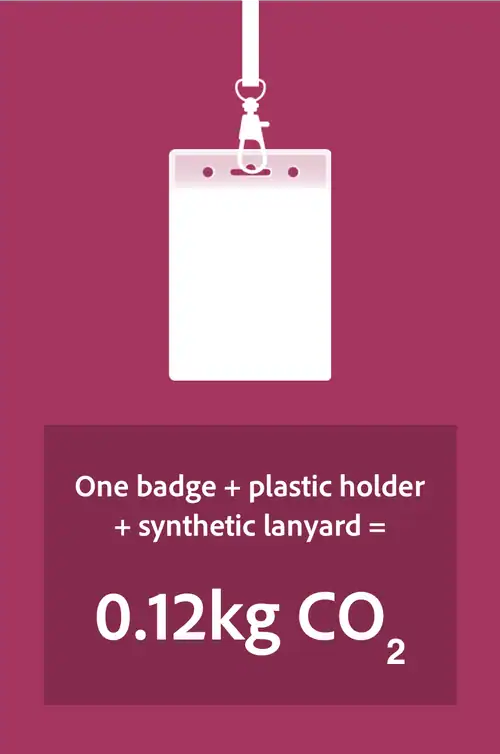
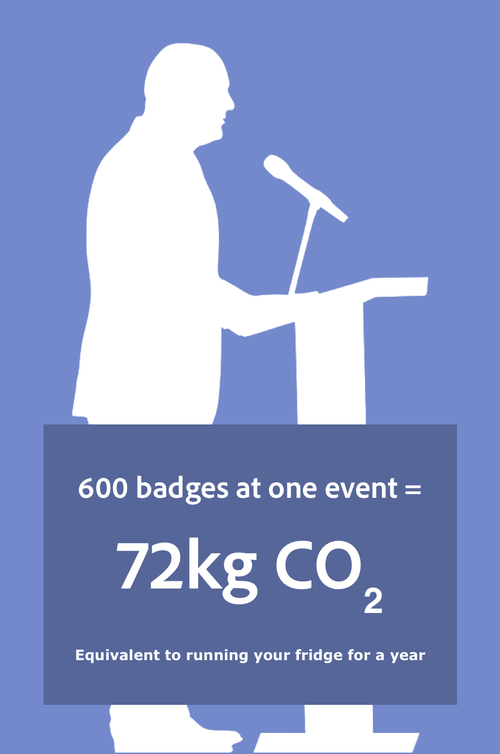
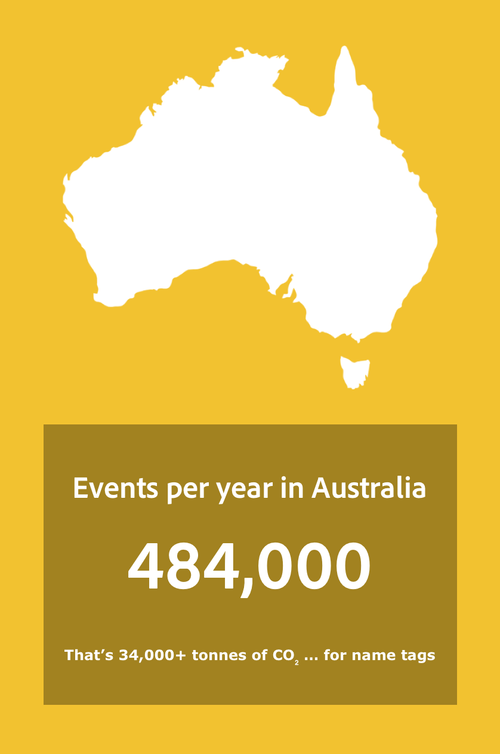
A traditional badge set — one badge, one holder, one synthetic lanyard — equals roughly 0.12 kg CO₂. That means the impact of conference name tags from a 600-person event is about 72 kg CO₂, or the same as running your fridge for a year. Australia hosts around 484,000 events annually, creating more than 34,000 tonnes of CO₂ from name tags alone. That’s a huge collective footprint and a massive opportunity to make change.
CO₂ figures shown here relate to the production of plastic badge holders and synthetic lanyards. Emissions savings are calculated as avoided emissions when plastic components are not produced. End-of-life impacts such as incineration or landfill degradation are excluded to maintain a conservative estimate.
Note on the impact of conference name tags: CO₂ emissions calculated based on the production phase of plastic materials. End-of-life impacts, such as incineration or landfill degradation not included. Source: www.homeaffairs.gov.au
Small Switch. Big Impact.
When you choose eco-friendly event badges instead of plastic, your event instantly cuts waste, emissions, and guilt. Our badges are compostable, recyclable, and customisable without the plastic, prep, or fuss. Each sustainable name tag solution you choose reduces landfill waste and supports circular design. That’s an impact of conference name tags you can measure and feel good about.
LET’S RETHINK WHAT HANGS AROUND YOUR GUESTS’ NECK
Real Examples of Eco-Friendly Event Badges in Action
This is the eco friendly event badges impact your team can make by switching from plastic:
600 badges → 72 kg CO₂ saved (made from recycled street directories)
500 badges → 60 kg CO₂ saved (made from ‘Forget-Me-Not’ seed paper)
450 badges → 54 kg CO₂ saved (made from recycled paper)
That’s hundreds of kilograms of emissions avoided and thousands of flowers planted — proof that small choices compound into real climate action.
600 badges
72kg CO₂ saved
Made from recycled street directories
Guests loved the plantable twist
That’s like running 1,000 loads of laundry
500 badges
60kg CO₂ saved
Made from ‘Forget-Me-Not’ seed paper
Met sustainability goals
That’s like streaming 2,500 hours of video
450 badges
54 kg CO₂ saved
Made from recycled paper in full-colour
Paired with red biodegradable lanyards
That’s like charging 6,750 smartphones
The Best Alternatives to Plastic Name Badges
Whether you’re cutting emissions, reducing waste, or seeking the best plastic name badge alternatives, here’s how each option stacks up and reduces the impact of conference name tags on our planet:
– Recycled Paper Badges – Sustainable, affordable, fully customisable
– Seed Paper Badges – Plantable, zero-waste, designed for single-use events
– Bamboo/Wooden Badges – Reusable, premium finish, higher footprint
– rPET Badges – Made from recycled plastic, still plastic
– Compostable PLA Badges – Compostable in industrial facilities only
– Tyvek Badges – Tough, non-biodegradable
How to Reduce the Impact of Conference Name Tags at Your Next Event
Want a quick win? Choose event materials that are as thoughtful as your agenda. Our plantable name badges are already reducing waste in Brisbane, Sydney, Melbourne, Perth, Adelaide, and Canberra helping teams align sustainability goals with style. Terra Tag’s badges are handcrafted from recycled and seed paper, printed in Australia, and shipped in compostable packaging. Because sustainability shouldn’t be complicated — or dull.
FAQs About Name Badge Sustainability & Materials
Switch from Wasteful to Wonderful: Sustainable Name Tag Solutions That Actually Work
Ready to shrink the impact of conference name tags at your next event? Switch to Terra Tag’s sustainable name tag solutions handcrafted from recycled or seed paper, paired with biodegradable lanyards. It’s a simple swap with a massive impact on waste, emissions, and how your guests feel about your brand.