
What Should Be On A Name Badge? 7 Essential, Brilliant Must-Haves

Ah, the humble conference name badge — often the unsung hero of networking events, quietly bridging the gap between awkward introductions and fruitful collaborations. In short, if you’ve ever wondered what should be on a name badge, it’s more than just a name — design choices drive real-world networking.
Let’s dive in, shall we?
Recognition First Badge Design System™
See the design system put into practice
The Recognition First Badge Design System™ explains the principles behind readable conference badges. Our free Canva badge templates apply those principles using proven layouts, making it easy to customise a professional badge for your event.
Explore the free badge templatesWhat Is a Conference Badge and What Should Be On It?
What are the different types of conference badges?
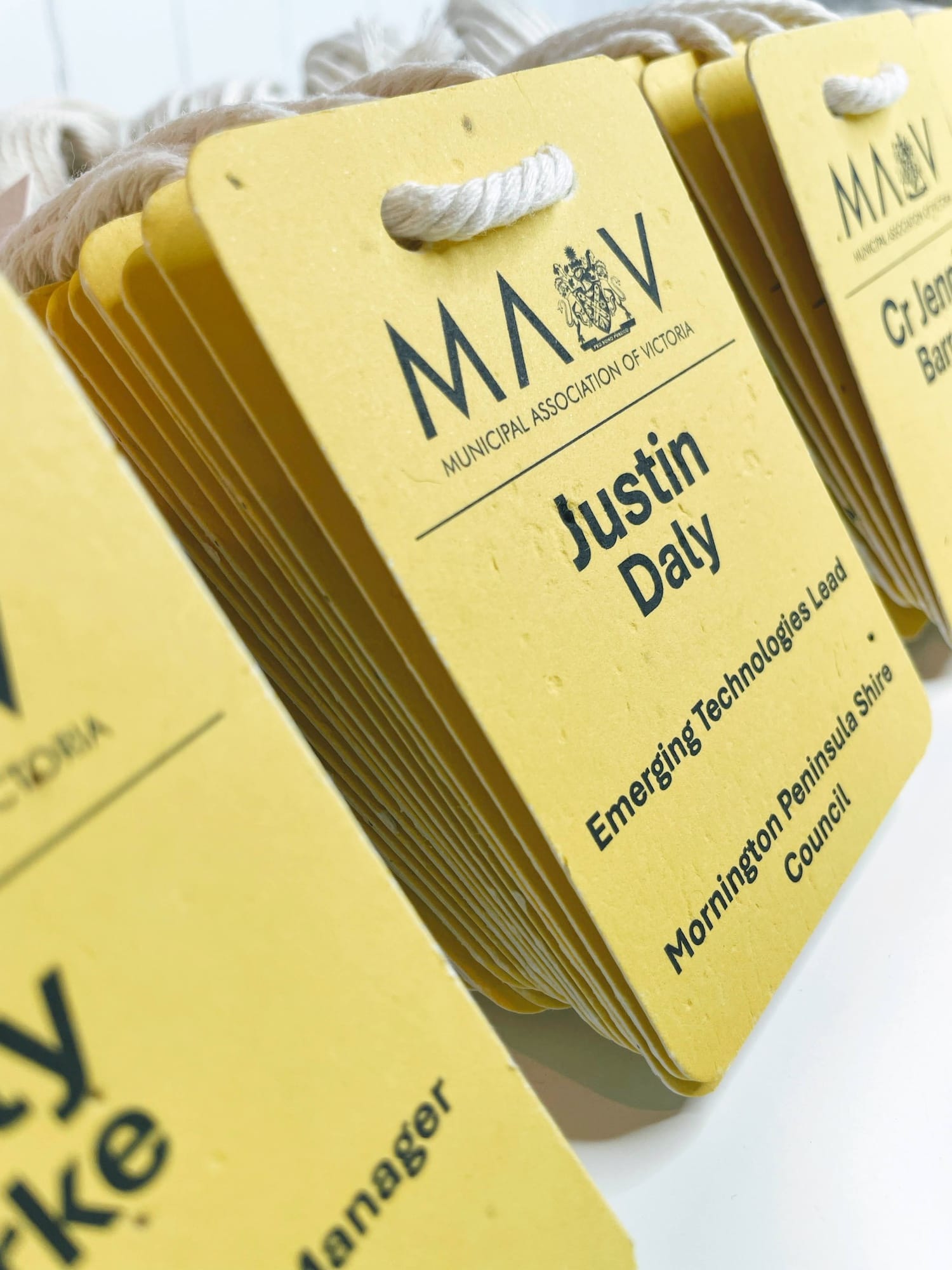
From the classic lanyard to digital badges, there’s a whole world to explore. Options range from eco-friendly seed paper badges that can be planted (memorable) to tech-savvy versions with scannable codes.
How do conference badges vary by event type?
Different events call for different badges. A tech expo may lean digital, while a sustainability conference could spotlight recycled or plantable materials.
What purposes do badges serve beyond identification?
Beyond ID, badges are networking helpers and branding assets that carry your event’s identity out into the world.
How have conference badges evolved over time?
We’ve moved beyond stickers to smarter, greener, more versatile badges — often doubling as digital business cards and souvenirs.
Recognition First Badge Design System
Build better conference badges with the complete design frameworkTM
Badge content is just one part of good badge design. The Recognition First Badge Design SystemTM brings together hierarchy, typography, badge sizes, layouts, accessibility, print production, and workflow into one practical framework for designing conference name badges that work.
Explore the Design SystemName Badge Format: What Should Be On a Name Badge
What information should be included?
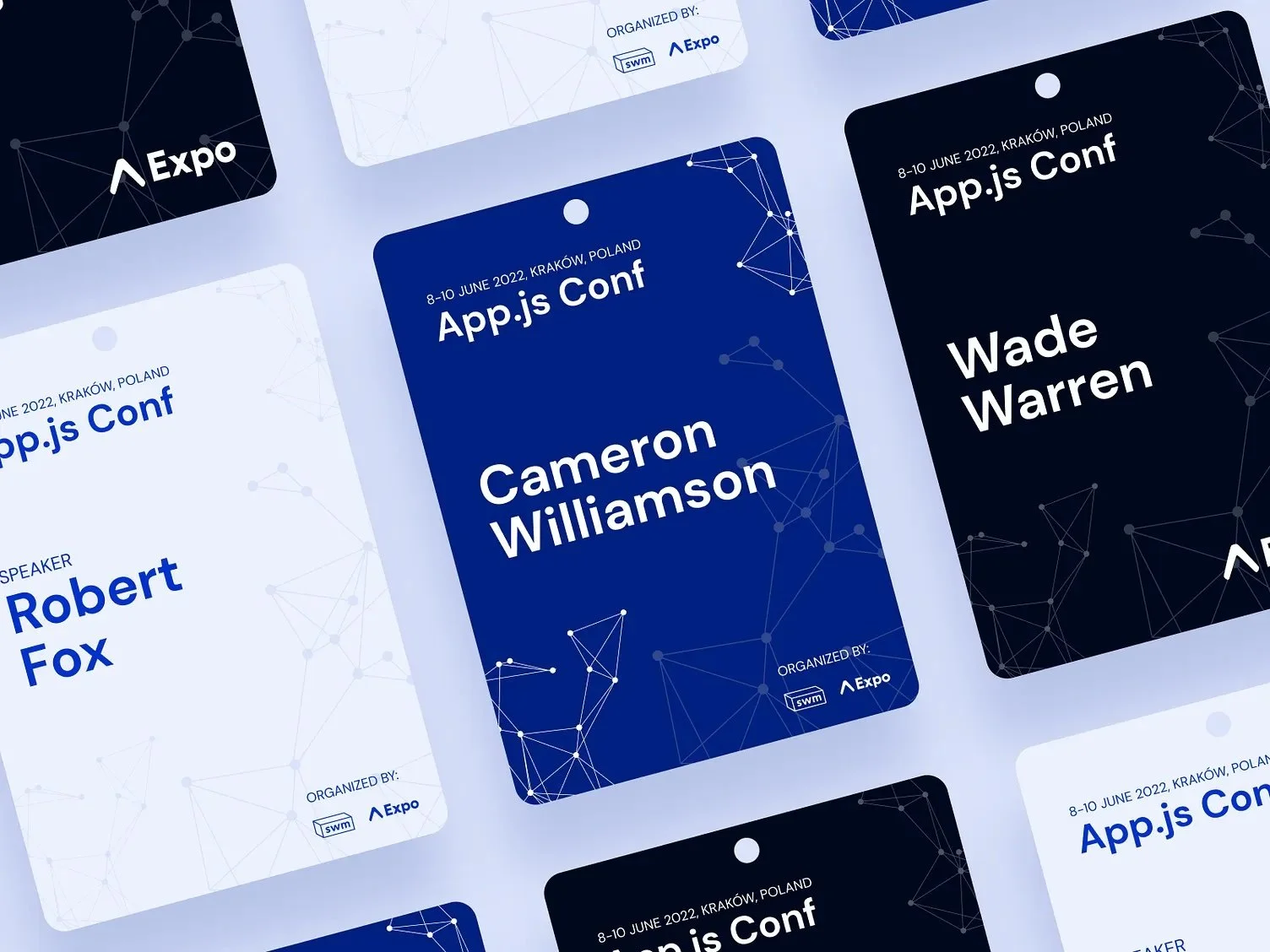
The essentials — attendee name, role, and the event logo — are non-negotiables. The short answer to what should be on a name badge: a large, readable first name, clear role, and subtle branding that supports identification.
In what order should information appear?
Prioritise the attendee’s name first (largest), followed by role and company, with the logo supporting — not shouting.
How should attendee types be differentiated?
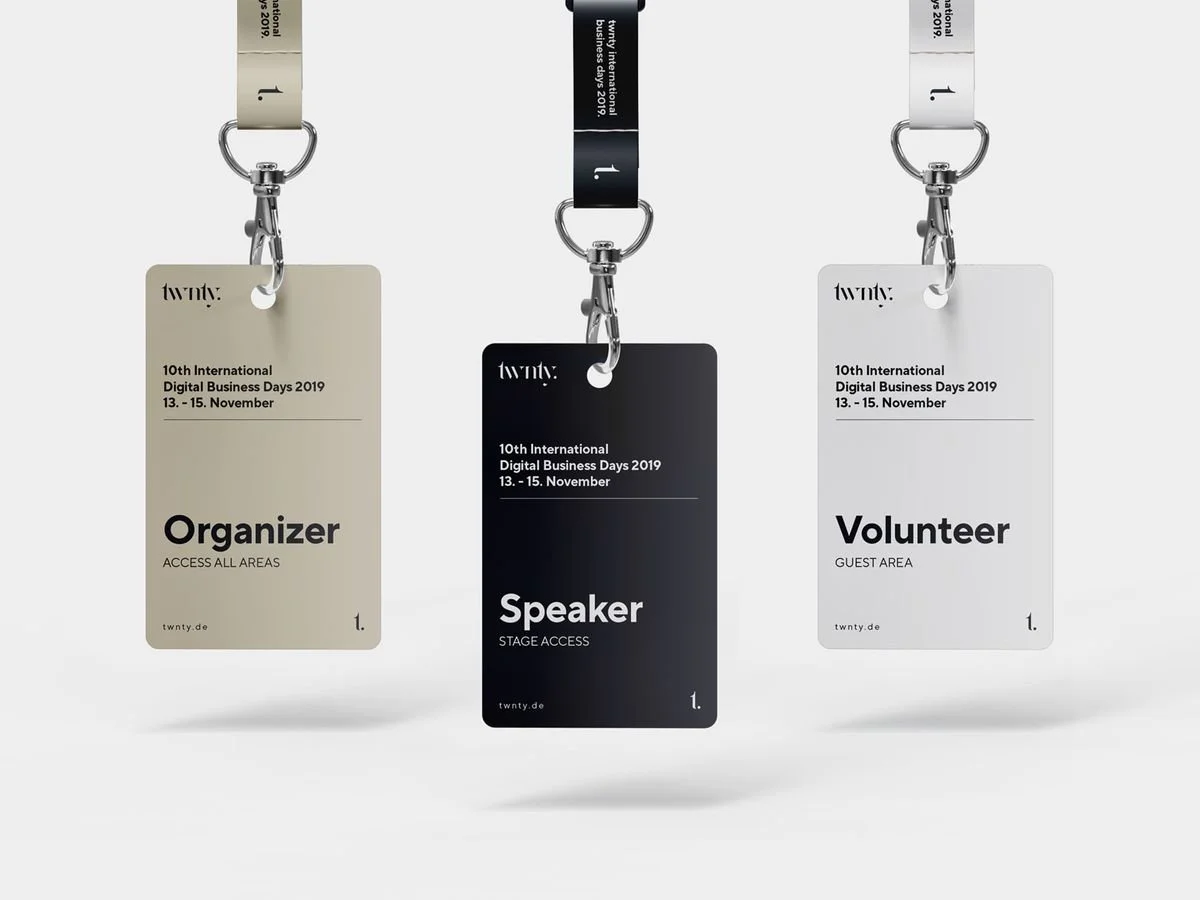
Use subtle colour accents or icons to distinguish speakers, VIPs, staff, and general attendees.
Best-practice layout tips
For conference name badges, keep the layout clean and uncluttered so each element can breathe and be read at a glance. The name tag should dominate visually, followed by role and company.
What should every badge include?
Consider a QR code to link to details or schedules. A well-designed badge can be both a conversation starter and a keepsake.
What Should Be On a Name Badge: Complete Design Checklist
Before you dive into design, make sure you’ve got the essentials covered. You can also use our free templates in our name tag tools.
Attendee information: Name, role, and organisation.
Event branding: Logo and colour palette for consistency.
QR codes: Link to profiles, schedules, or resources.
Eco-friendly materials: Recycled or plantable options.
Accessibility features: High contrast and legible type.
Customisation: Space for roles, tracks, or colour codes.
Eco-Friendly Materials: The Terra Tag solution
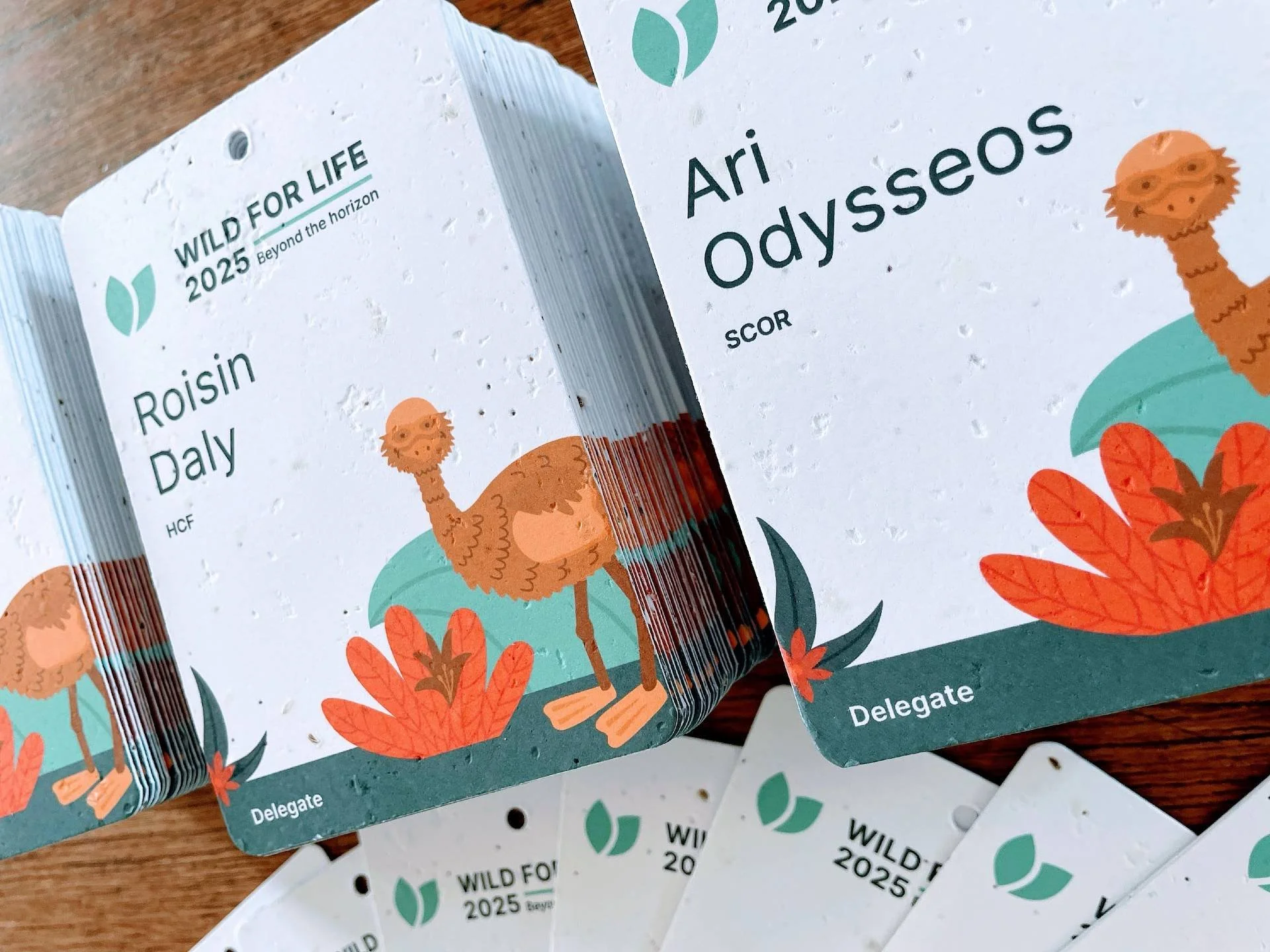
Terra Tag offers badges made from recycled papers and seed-infused papers that can be planted after the event — helping your badge live on as wildflowers, not landfill.
Accessibility considerations
Use large, legible type and strong contrast. Consider tactile markers or Braille where appropriate.
QR codes: a gateway to engagement
Add QR codes to name badges to link planting instructions, schedules, or contact details — they make eco-friendly conference badges more interactive and reduce paper handouts.
What is the best font size for name tags?
Font size for legibility at a distance
Aim for roughly 28–38 pt for names. Always print a sample and test at handshake distance.
How size varies with badge dimensions
Keep proportions sensible: larger badges offer space, but the name still needs to dominate visually.
Balancing extra info (company, role)
Use hierarchy: name first, then role and company at smaller sizes.
Hierarchy improves readability
A clear typographic hierarchy guides the eye and speeds up introductions.
What is the size of a conference badge?
Most popular badge size
A6 (10.5 × 14.85 cm) and A7 (7.4 × 10.5 cm) are widely used — readable, wearable, and practical.
Large vs small events
Bigger events may prefer slightly larger badges for extra info; smaller events can stay compact.
International preferences
Preferences vary by region, but readability and function should remain universal.
Trends and influencing factors
Larger formats are fashionable for bold design, but minimalist sizes still shine for simplicity.
Design, cost, and practicality
Larger badges allow more design freedom but can increase cost and feel bulky. Aim for the sweet spot.
Should name badges have last names?
Benefits of including surnames
Surnames add clarity in larger groups where first names repeat, improving accuracy and introductions.
Privacy considerations
Offer opt-in or opt-out choices so attendees control what appears on their badge.
Cultural and naming conventions
Respect different formats (e.g., family name order, multi-part names) with flexible fields.
When first names or initials are preferable
Informal events or privacy-sensitive contexts may use first names or initials to keep things friendly and simple.
That’s your whirlwind tour of conference badge best practice. When teams ask what should be on a name badge, the answer is clarity, accessibility, and smart use of features like QR codes. Design with sustainability in mind — and let the conversations flow.
