
Designing Conference Name Tags & Lanyards That Delight Attendees
Designing conference name tags and lanyards is crucial for corporate events, serving identification, networking, and consistent brand visibility.
In this comprehensive guide, we’ll walk you through selecting, designing, and implementing effective conference name tags and conference lanyards. By the end, you’ll feel confident creating memorable, readable, and on-brand badge experiences for your events.
Tip 1: Choose the Right Conference Name Tag Type
Conference name tags come in various forms, including traditional printed badges attached to lanyards, digital badges with embedded technology, and eco-friendly options like seed paper badges. Each type serves a unique purpose and offers distinct advantages.
Consider factors such as event type, audience demographics, and sustainability goals when choosing the most suitable tag and lanyard options for your event. Every material choice affects your designing conference name tags process and the overall event look.
Tip 2: Include the Essential Components
The key components of a conference name tag include the attendee’s name, their role or affiliation, and the event logo. These elements are essential for identification and also serve as branding opportunities for the event.
When designing conference name tags, ensure that each component is prominently displayed and easily readable from a distance.
Tip 3: Follow Design Best Practices for Conference Name Tags
When designing conference name tags, follow proven design principles to ensure they’re both visually appealing and functional. See our name tag tools for free templates, and review the colour contrast accessibility guidelines to ensure your badge text remains readable for all attendees.
Incorporate Event Logo and Branding:
Include the event logo prominently on the tag to reinforce branding and create a cohesive event experience.
Ensure the logo is clear, legible, and properly aligned with other elements.
Consider event colours and design elements to enhance branding consistency and recognition.
Consider Sponsor Logos and Branding:
If applicable, include sponsor logos to acknowledge support and enhance brand visibility.
Size and position sponsor logos appropriately relative to the event logo and other elements.
Maintain balance so sponsor branding doesn’t overwhelm the tag design.
Choose Colour Scheme Wisely:
Select a colour scheme that complements the event theme and enhances readability.
Use high-contrast colours for text and graphics to ensure legibility, especially from a distance.
Consider the psychological impact of colours and their association with brand identity and event objectives.
Limit the number of colours to avoid visual clutter and maintain a clean design.
Font Selection and Legibility:
Choosing the right font is crucial for readability and visual appeal.
Opt for sans-serif fonts like Arial or Helvetica for clear, modern readability.
Use font sizes around 28–38 pt so names are legible at a glance.
Maintain hierarchy: larger, bolder attendee name; smaller role and company.
Optimise Layout for Readability:
Design a clear layout that prioritises readability and ease of scanning.
Place attendee names and affiliations prominently.
Use hierarchical typography to differentiate information levels.
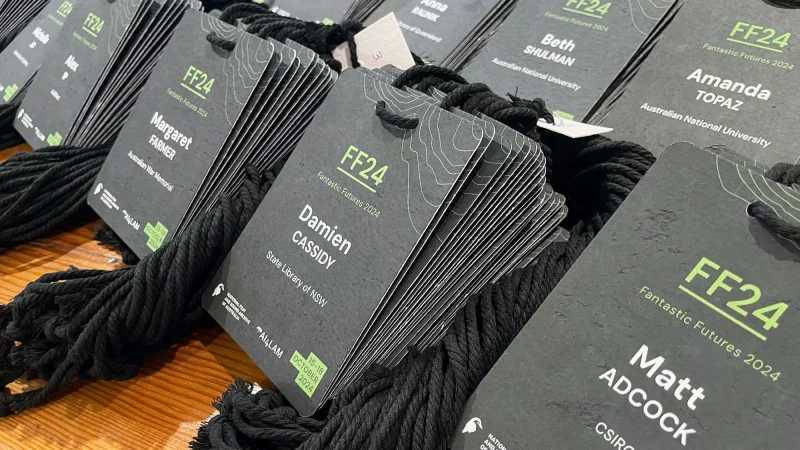
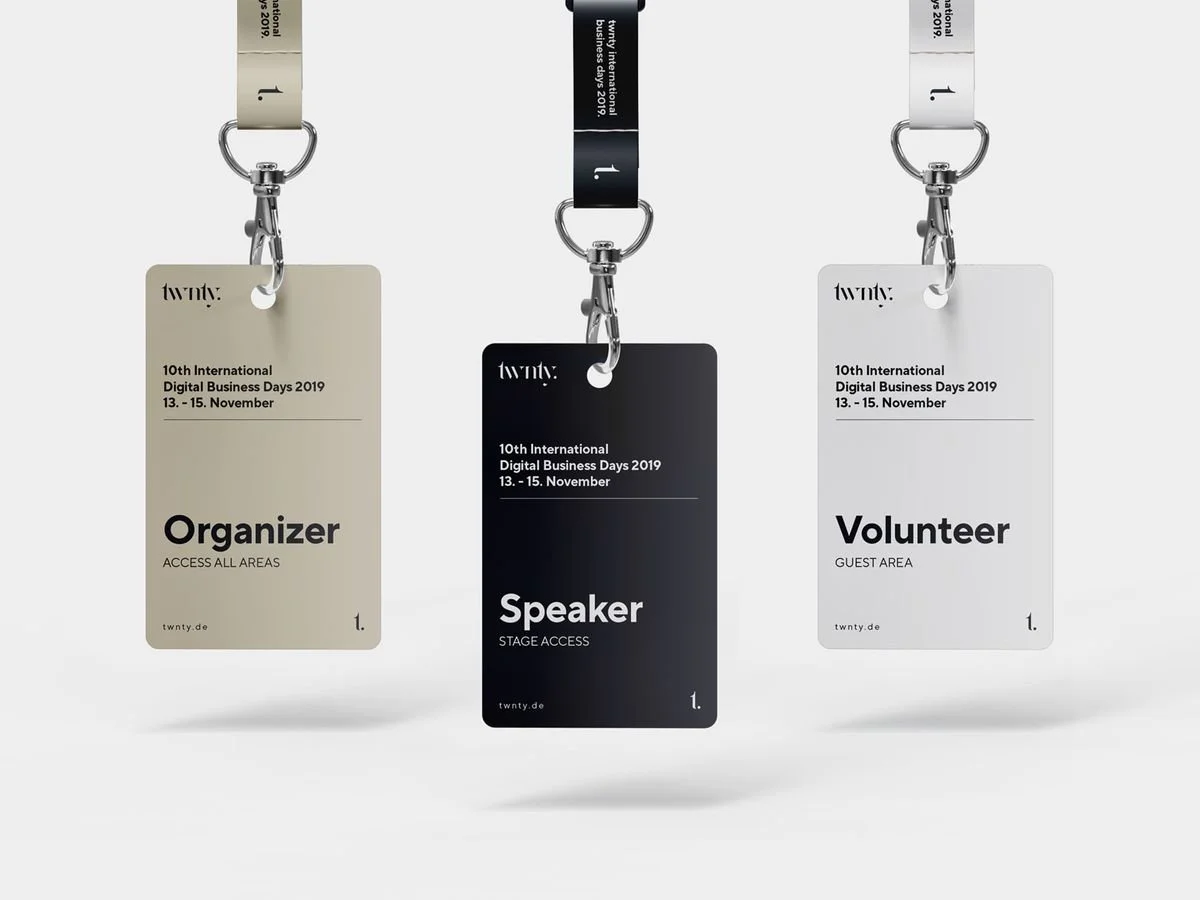
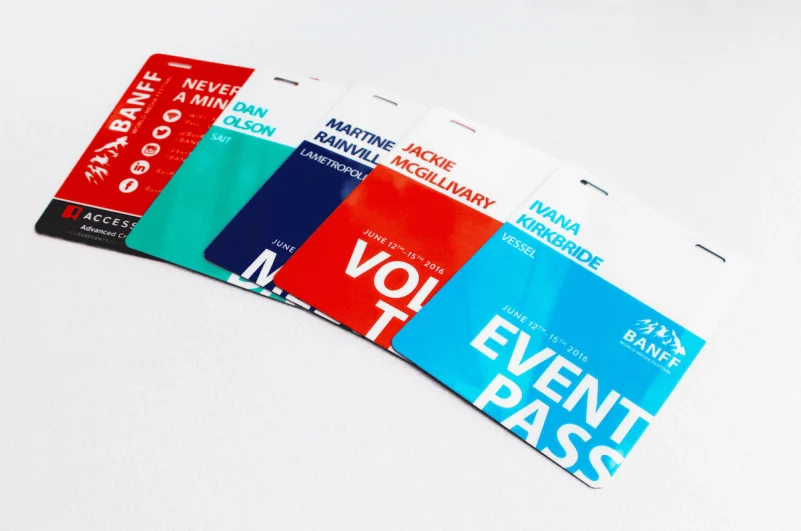
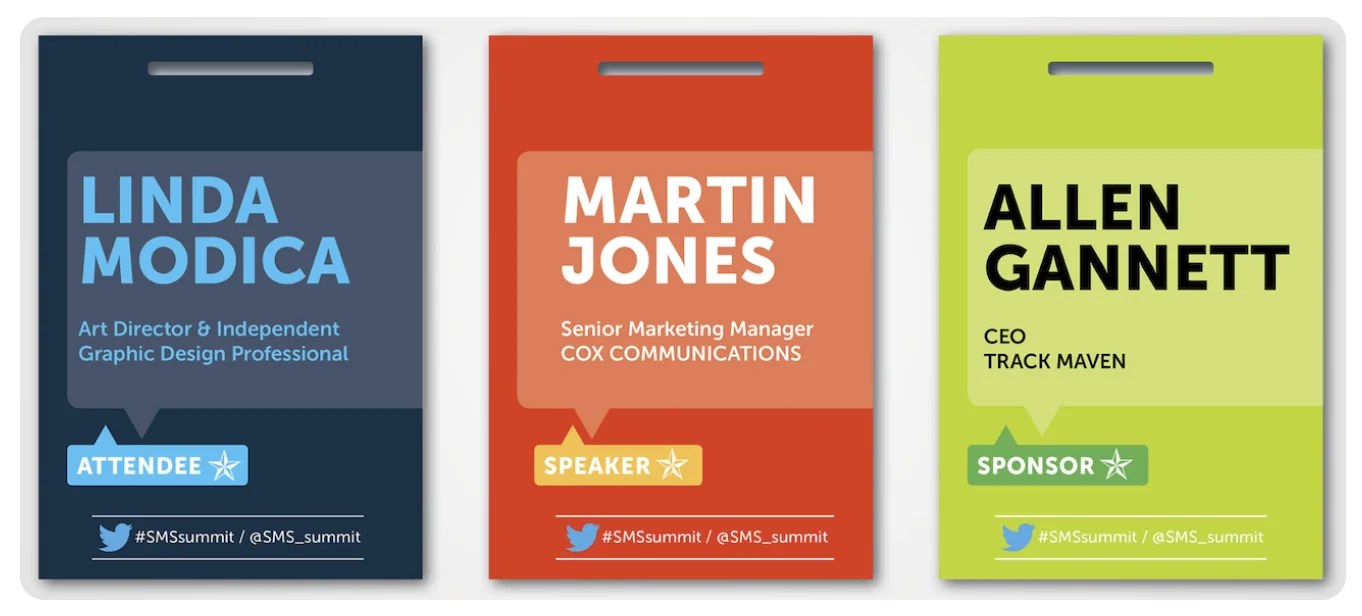
See examples of professional conference name tag designs below for creative inspiration.
Design Inspiration: Beautifully Crafted Conference Name Tags
Tip 4: Pick the Right Badge Size
Selecting the appropriate size depends on event scale, attendee demographics, and design preferences.
Standard sizes include A6 (10.5 × 14.85 cm) and A7 (7.4 × 10.5 cm), which balance visibility and convenience. Larger tags provide more space but may be cumbersome for multi-day events.
Consider practicality and visibility to choose the option that best suits your event needs and supports your designing conference name tags goals.
Tip 5: Prototype & Test for Real-World Readability
Before finalising, print samples and test under different lighting and viewing distances.
Assess readability, legibility, and overall visual impact with stakeholders and potential attendees.
Iterate based on feedback to improve your designing conference name tags process.
Tip 6: Build in Accessibility from the Start
Accessibility should be considered during designing conference name tags, ensuring readability for all guests. Use large, legible fonts, high-contrast colours, and tactile elements like embossed text or Braille.
Offer alternative formats or accommodations on request to create a more inclusive environment.
Tip 7: Nail Printing & Production
Choose a reputable supplier for your conference name tags and lanyards. Discuss size, materials, and design to ensure the final product meets expectations. Request proofs and samples before finalising, and factor in lead time, quantity discounts, and delivery options. For extra quality control, review these professional badge printing standards to ensure your finished badges look flawless under real-world event conditions.
Tip 8: Streamline Distribution & On-Site Management
Plan badge distribution to enable a smooth check-in. Depending on logistics, use staffed desks, self-serve badge kiosks, or mobile apps. Train staff or volunteers to assist and keep conference lanyards clearly sorted to reduce wait times.
Tip 9: Add QR Codes & Interactive Features
Integrate QR codes to link to schedules, speaker bios, sponsor pages, or feedback forms. Provide simple instructions for scanning so attendees can access information quickly.
Tip 10: Choose Sustainable, Eco-Friendly Materials
Sustainability plays a huge role in designing conference name tags for modern events. Seed paper tags can be planted after the event. Consider eco-friendly name tags wherever possible and work with suppliers who offer greener options.
Designing conference name tags and lanyards becomes straightforward when you follow these 10 tips, ensuring memorable, readable, and on-brand badges for every event.
Remember to consider tag type, size, font selection, accessibility features, and sustainability goals when planning and designing your tags.
By prioritising attendee experience and engagement, you’ll create conference name tags that serve their practical purpose and leave a lasting impression.
