
4 Best Eco-Friendly Alternatives to Plastic Name Tags for Events
Updated June 22, 2026
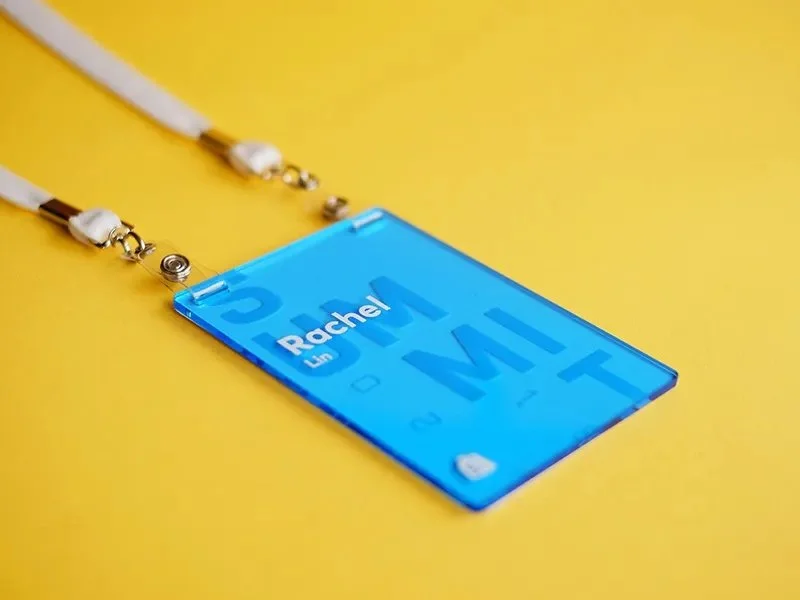
Looking for alternatives to plastic name tags?
You are in the right place. Plastic badges clutter landfills, pollute oceans and do not align with modern sustainability goals. Below are the best eco friendly name badge options — and the one solution that leaves no trace behind.
Once you have chosen your material, the next decision is design. The Conference Name Badge Design System covers hierarchy, font size, and readability — so your eco-friendly badge works as hard as it looks.
Plastic name badges are outdated. They clutter landfills, pollute oceans and do not align with today’s eco-conscious events. If you are looking for sustainable name tag options that genuinely reduce waste instead of just feeling less bad, you are in the right place.
Below we compare four clear front runners — each with a different balance of cost, environmental impact and guest experience — including the one option that leaves guests with herbs and flowers instead of landfill.
Why plastic name tags are no longer good enough
Most plastic badges and holders are used once and thrown away. Plastic lanyards, badge holders and clips can take centuries to break down. Many badges are hard to recycle because they combine plastic and metal components. Manufacturing and shipping plastic badges adds to fossil fuel emissions.
According to the Australian Government National Waste and Resource Recovery Report 2024, plastics have one of the lowest recovery rates in the waste stream — meaning most plastic still ends up in landfill rather than being recycled. Read the report.
If your event has a sustainability policy, plastic badges are not helping.
The four best alternatives to plastic name badges
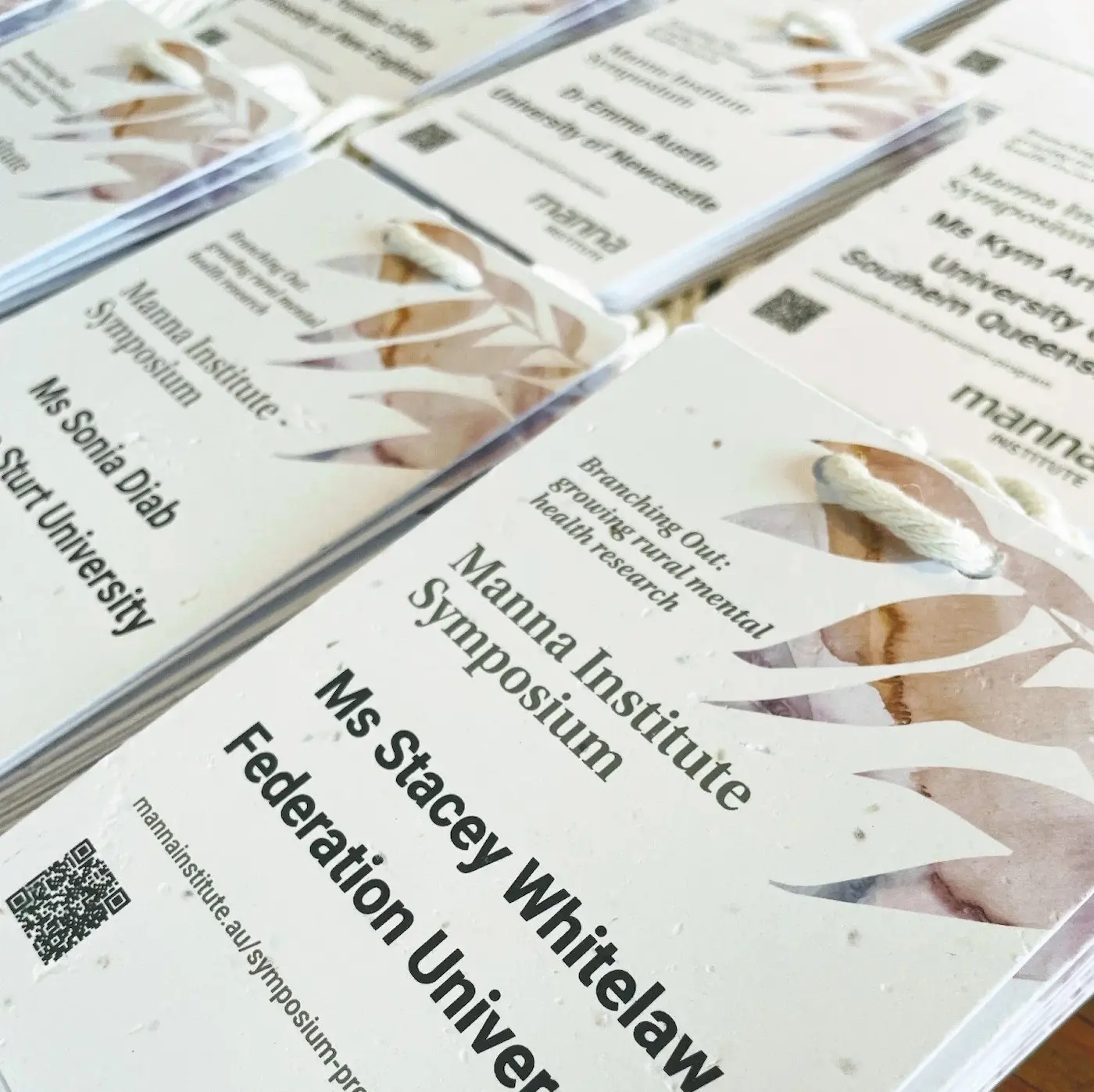
1. Recycled paper name badges
Name tags made from recycled paper stock instead of virgin paper or plastic. Printed with guest names, they work well with cardboard or paper-based clips and lanyards.
- Lighter footprint than plastic and easy to recycle in most office systems.
- Simple to design and customise with logos and guest details.
- Budget friendly for high head count events.
- Still creates waste at end of life if guests do not recycle.
- Can look less premium than wood or seed paper if poorly designed.
Recycled paper badges are a solid step up from plastic and one of the most accessible alternatives for large events, especially where existing recycling bins are in place.
2. Bamboo or wooden name badges
Typically laser engraved or printed onto a timber or bamboo base. Designed to be kept and reused rather than thrown away after each event.
- Durable and long lasting when collected and reused across events.
- Looks premium on camera and in photos.
- Can be composted if untreated and separated from metal fittings.
- Requires new material sourcing rather than upcycled inputs.
- Less suitable for one-off events where reuse is unlikely.
- Higher cost per badge than paper options.
Wooden badges suit organisations that run regular internal events and can store and reissue the same badges across multiple occasions.
3. Compostable plastic-style name badges
Made from plant-based films such as PLA or cornstarch blends. Designed to look and feel similar to traditional plastic name tags while breaking down faster under the right conditions.
- Familiar appearance — an easy stakeholder switch from standard plastic.
- Can break down faster than conventional plastic in suitable compost systems.
- Reduces reliance on fossil fuel-based plastics.
- Most products require industrial composting — not home compost or kerbside bins.
- Still needs energy and resources to produce and distribute.
- A better plastic, not a no-waste solution.
A useful bridge option where reliable collection and commercial composting are available. Less suitable for public events where waste streams are hard to control.
4. Seed paper name badges
Made from plantable paper embedded with real seeds. Guests wear them during the event, take them home, plant them in soil and grow flowers or herbs. The badge becomes a small garden instead of a piece of rubbish.
- One hundred percent biodegradable and compostable — no plastic sleeves.
- No landfill. Badges are designed to be planted or composted after use.
- Creates a strong emotional connection and a lasting memory for guests.
- Aligns clearly with sustainability policies and ESG reporting.
- Higher unit cost than basic paper or plastic — though no disposal costs arise.
- Needs simple planting instructions so guests understand what to do.
Among all alternatives to plastic name tags, seed paper badges are the only option that leaves no trace behind. After the event, they become herbs, flowers and native-friendly plants rather than waste.
Why Terra Tag seed paper badges go further
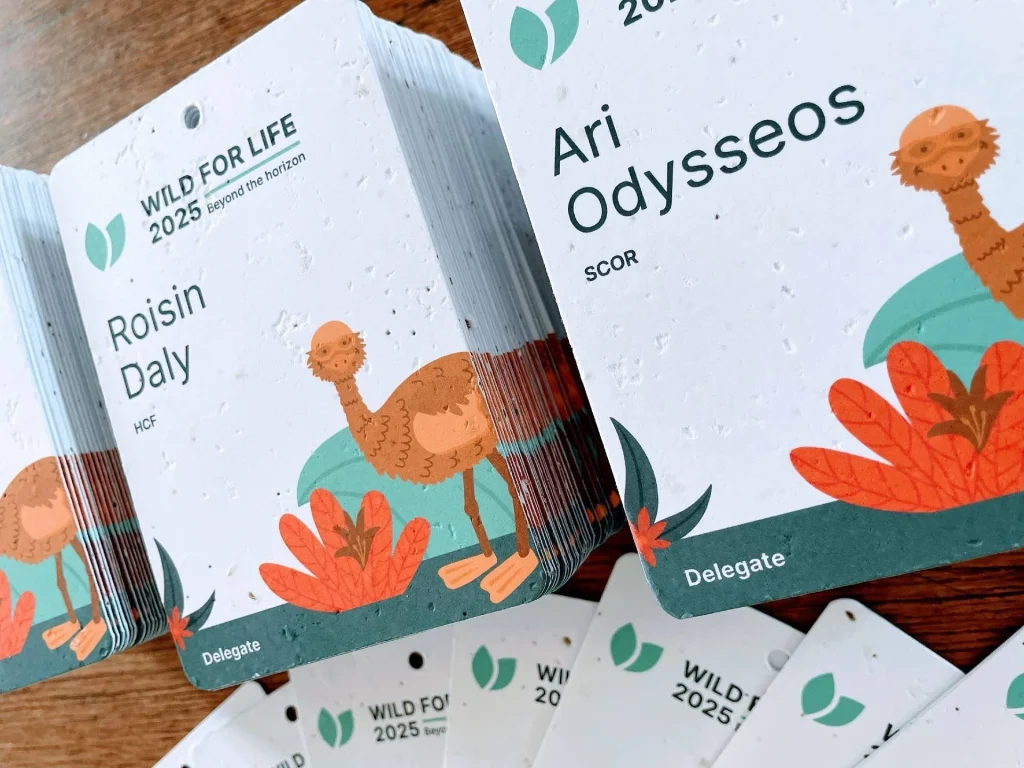
Terra Tag does not just swap plastic for another material. We redesign the whole name badge experience so it works better for people, events and the planet.
What sets Terra Tag eco friendly name badges apart
- Handmade from rescued paper waste rather than virgin pulp.
- Sturdy 300gsm thickness so badges last comfortably through one to two day events.
- Plantable and compostable seed paper that breaks down cleanly and grows new plants.
- Thoughtful design support so your sustainable badges still look on brand in photos and on screen.
- Biodegradable cotton lanyards to avoid plastic clips and synthetic fibres.
Terra Tag seed paper badges are the only option in this list that actively improves the environment after use. They turn an unavoidable event item into a story guests are proud to share.
Choosing the right alternative for your event
The best alternative depends on your budget, waste systems and audience. Recycled paper and bamboo are strong steps forward. Compostable badges work when you have tight control over waste streams. Seed paper badges go further and remove waste from the equation entirely.
If you are running sustainability-focused conferences, internal strategy days or community events, seed paper badges are a clear way to show that your eco commitments reach all the way down to the name tag.
Next steps: from material choice to finished badge
Once you have chosen your material, three things need to happen before your badges are ready. Here is a simple sequence to follow.
Ready to move beyond plastic? Terra Tag seed paper badges are made from rescued paper offcuts, embedded with seeds, and delivered fully assembled. See our conference name badge options →
More help with sustainable name tags
Explore more guides on eco friendly name badges
